
For many manufacturers, the ability to take on larger orders or deliver complex components depends directly on the quality and capability of their machines. Precision fabrication, infrastructure projects, automotive supply chains, and engineering contracts increasingly demand accurate, high-speed machining. That makes modern metal cutting equipment essential. But these machines require significant capital investment, which is not always easy for growing enterprises to manage while also running day-to-day operations.
Metal cutting machine loans for MSMEs allow manufacturers to finance machines while preserving their working capital. Well-structured machinery loans enable MSMEs to expand their business without slowing ongoing projects or supplier commitments. When planned carefully, equipment financing options become part of a long-term growth strategy rather than a short-term expense.
Why Metal Cutting Machinery Loans for MSMEs Are Critical for Production Growth
Metal cutting equipment forms the backbone of several manufacturing sectors. Fabrication units, engineering workshops, construction component manufacturers and heavy industry suppliers rely on these machines to produce precision parts. For MSMEs, upgrading to modern equipment without waiting years to accumulate capital is a crucial step to enhance dimensional accuracy, reduce manual intervention, and ensure consistent output for business growth.
For businesses aiming to participate in large infrastructure or industrial supply chains, machine capability often determines eligibility for contracts.
Increasing Production Capacity Without Blocking Working Capital
Buying industrial equipment with upfront payments can significantly reduce available working capital. That affects raw material purchases, wages and operational flexibility.
Machinery loans for MSMEs in India allow businesses to:
- Acquire the machine immediately
- Spread the cost through manageable instalments
- Maintain liquidity for production expenses
How Metal Cutting Machinery Loans for MSMEs Improve Cash Flow Management
Preserving Liquidity for Ongoing Projects
Manufacturing businesses often operate with tight project timelines and supplier commitments. Using internal funds to buy machines can strain working capital at the wrong time. Metal cutting machine loans for MSMEs are a good idea to preserve liquidity while still investing in new capacity. This is especially useful when projects require consistent procurement of materials and timely wage payments.
In many cases, interest paid on machinery loans is often tax-deductible, which further improves the financial efficiency of the investment.
Balancing Working Capital, Profitability, and Capital Expenditure
Equipment purchases fall under capital expenditure, while materials, utilities and labour are part of operational spending. A business loan for factory equipment helps businesses balance these two financial requirements. When capital expenditure is financed rather than paid upfront, companies can continue allocating working capital to production cycles, ensuring smooth operations.
Metal Cutting Machine Loans for MSMEs with Flexible Interest Rates and Repayment Plans
Fixed vs Floating Interest Rates
Borrowers typically evaluate both fixed and floating structures when considering the metal cutting machine loan interest rate.
- Fixed rates provide predictable EMIs throughout the loan tenure.
- Floating rates may adjust with market conditions and can sometimes offer lower initial costs.
EMI Structuring for Established Industrial Businesses
Loan repayment schedules can often be structured to match the business’s revenue cycle. This flexibility is particularly useful when machines are used for project-based manufacturing.
Long-Term Tenure Benefits for Mid-Sized Companies
Longer repayment tenures allow businesses to keep monthly obligations lower while the machine continues generating revenue. Many mid-sized manufacturers with growing order books prefer such structures because they maintain financial stability during expansion phases.
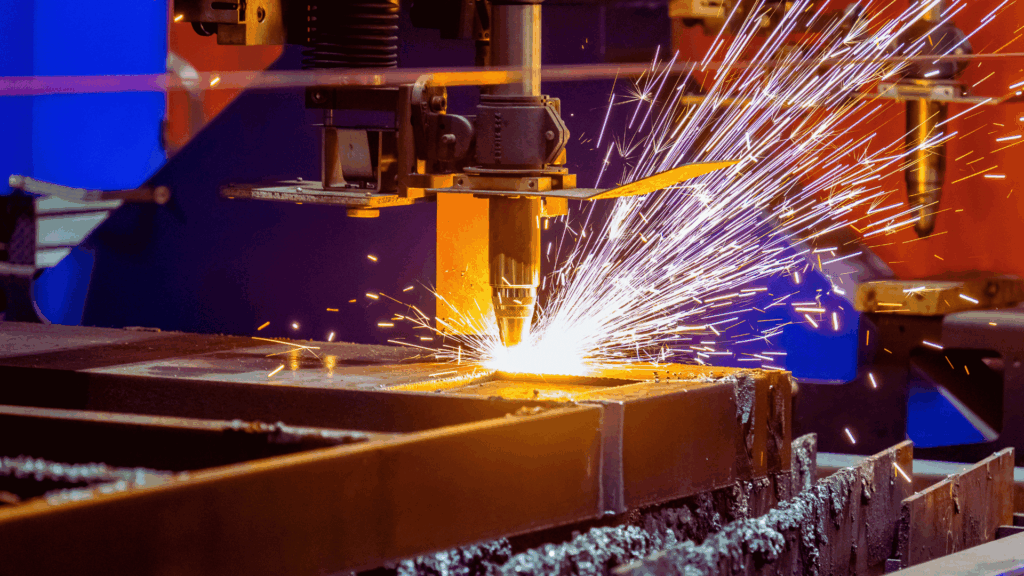
Technology Upgrade to Modern Machinery Through Metal Cutting Machine Loans for MSMEs
CNC and Automation Adoption
The move toward automation has made CNC machining increasingly common across industrial sectors. Manufacturers often explore a CNC machine loan for MSMEs to acquire equipment that improves both speed and precision.
Reducing Operational Downtime
Loan repayment schedules can often be structured to match the business’s revenue cycle. This flexibility is particularly useful when machines are used for project-based manufacturing.
Staying Competitive in Export & Infrastructure Markets
Export-oriented manufacturing and infrastructure supply chains demand strict quality standards. Businesses equipped with modern machining technology are better positioned to meet those expectations. Access to financing ensures that MSMEs can upgrade equipment before technological gaps affect competitiveness.
Collateral-Free and Assessment-Based Financing Options for Metal Cutting Machines
Machine-Based Financing Approach
Many lenders structure loans around the machine being financed rather than requiring large property collateral. This approach makes collateral-free machinery loan options accessible to businesses with a strong operational performance.
Such financing methods focus on the value and productivity potential of the equipment itself.
With specialised industrial machine loans in India, Electronica Finance Limited can provide support for the specific requirements of each customer. EFL’s approach emphasises simplified processing and industry familiarity, making the loan process easier for manufacturers.
SIDBI-Recognised NBFC Advantage
As a lender recognised by SIDBI, EFL brings sector expertise in machinery financing. This helps MSMEs access funding solutions designed specifically for equipment acquisition rather than generic loans.
Metal Cutting Machine Loans for MSMEs as a Strategic Expansion Tool
Supporting New Ventures and Large Contracts
When businesses secure large orders, equipment capacity often becomes the next challenge. Financial support in the form of metal cutting machine loans allows companies to acquire additional machines quickly and fulfil new contracts without delay.
Scaling Production for ₹10–50 Cr Turnover Companies
Mid-sized manufacturing firms frequently reach a stage where demand increases faster than production capability. Financing machines helps these companies scale operations without overextending their internal resources.
Machinery Loan – Documents Required
Loans for metal cutting machines generally require business financial records, identity verification, and machine quotations, depending on the lender’s assessment framework.
Conclusion
For growing manufacturers, machine capability directly influences production output, contract eligibility and long-term competitiveness. Investing in modern equipment can significantly improve efficiency and accuracy, but the capital requirement often makes businesses hesitant.
With structured financing and the right machinery loan, manufacturers find it easier to scale operations and respond quickly to new opportunities in India’s evolving industrial landscape.
Businesses considering machine financing can explore options conveniently through the EFL Clik App, which allows manufacturers to begin the application process and access machinery funding solutions efficiently.
FAQs
Why choose a machine-focused NBFC for Metal Cutting Machine Loans?
A specialised lender understands the need for modern machinery, equipment value, industry cycles, and machine productivity. This often results in faster evaluation and financing structures that suit manufacturing businesses.
What tenure options are available for Metal Cutting Machine Loans?
Loan tenure generally depends on the machine type, cost and business profile. Many lenders offer flexible repayment periods so that instalments remain aligned with the machine’s revenue generation.
How do metal cutting machine loans improve cash flow management?
By spreading the machine cost across instalments, businesses avoid large upfront payments. This keeps working capital available for materials, labour and ongoing production activities