
For many Indian homeowners and businesses, the decision to invest in rooftop solar begins with a simple question: “Will my roof actually generate enough returns to justify the cost?” Roof orientation ends up being the cause of hesitation, especially if the structure does not face south. East-facing roofs, in particular, are frequently misunderstood and underestimated.
In reality, solar performance is not a black or white equation. Sunlight availability, energy consumption patterns, system design, and financing structures all work together to determine outcomes. An east-facing roof may not deliver peak midday generation, but it can still produce meaningful solar energy, reduce electricity bills, and qualify for structured solar financing when assessed correctly. This is why understanding both technical performance and funding viability becomes essential.
This article looks closely at how east-facing roofs perform, how they affect returns, and how rooftop solar financing works in the Indian context when the roof direction is less than ideal.
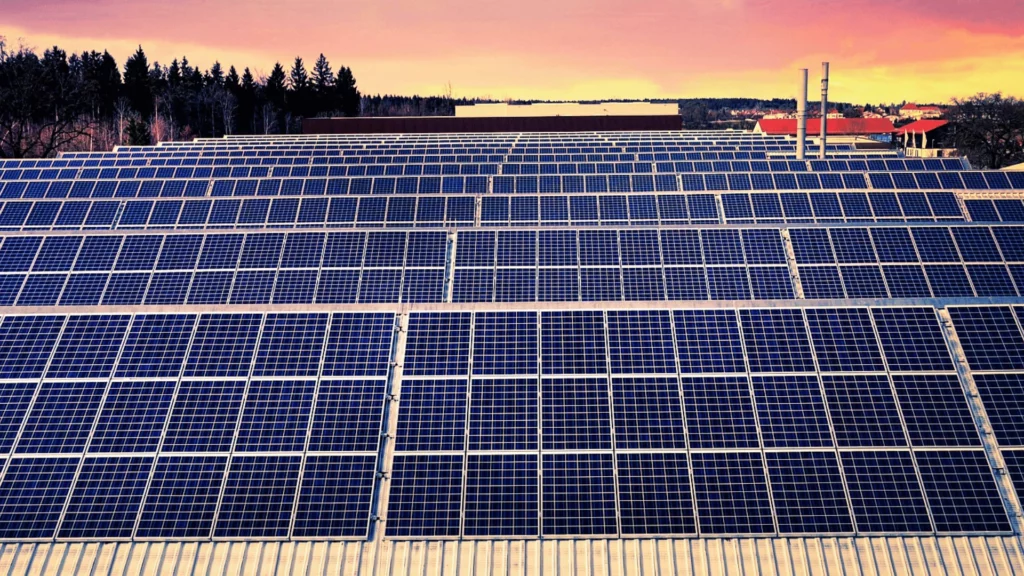
How Roof Orientation Affects Solar Panel Efficiency and Solar Power Generation
Roof orientation plays a direct role in solar energy generation. In India, south-facing roofs are often considered the benchmark because they receive consistent sunlight throughout the day. But this does not mean other orientations are ineffective.
An east-facing roof captures stronger morning sun, which aligns well with early-day power usage in many homes and businesses. When paired with the right tilt, an efficient solar system, and professional design, east-facing installations can still achieve strong energy production.
Key factors influencing output include:
- The direction your roof faces
- Available roof area
- Shading during peak hours
- System capacity and module efficiency
Understanding solar panel direction efficiency helps homeowners set realistic expectations rather than dismissing viable rooftops outright.
Solar Performance on East-Facing Roofs
From a performance perspective, east vs south-facing solar panels differ mainly in generation timing rather than total failure or success. East-facing panels generate more power in the morning and taper off earlier in the afternoon.
While total annual output may be slightly lower than that of a south-facing roof, the difference is often within an acceptable range, particularly for users with average-to-above-average consumption and heavier daytime usage. Advances in solar panel performance and inverter technology have further narrowed this gap.
For many installations, especially rooftop solar projects for MSMEs, matching generation to usage matters more than chasing theoretical maximum efficiency.
Impact on Solar Returns (ROI and Payback Period)
When evaluating the solar ROI of an east-facing roof, the focus shifts to financial outcomes rather than peak wattage. Return on investment depends on:
- Cost of installation
- Annual units generated
- Grid tariff savings
- Financing structure
East-facing roofs may experience a slightly slower return on investment, but the difference is often marginal when systems are sized correctly. Morning-heavy generation can still offset a substantial portion of grid electricity, especially in setups where operations start early.
Payback periods remain attractive when combined with structured solar rooftop financing in India, particularly for MSMEs seeking predictable monthly savings rather than absolute maximum output.
East-Facing Roofs and Rooftop Solar Financing
Even though there is proof that east is suitable for solar panels, the traditional belief that rooftop solar panels can only be south-facing can cause some anxiety at the time of financing. You do not have to worry about it, though!
Lenders do approve projects on east-facing roofs, provided the technical assessment supports viable generation. Roof orientation alone does not disqualify a project from a solar installation loan or solar panel loan.
Key financing evaluation factors
- Expected annual generation
- Project IRR
- System size and cost
- Consumption offset percentage
These metrics influence solar loan eligibility more than the compass direction itself.
How professional solar assessment improves loan approval chances
A detailed site study by a qualified solar installer strengthens both technical confidence and financing approval. Accurate projections help lenders structure solar financing responsibly, especially for MSMEs applying under a solar energy scheme for businesses.
Projects that combine sound engineering with realistic financial modelling are far more likely to secure rooftop solar financing.
To get secure, easy, and structured funding options, businesses can explore solar financing options in India.
Is an East-Facing Rooftop Solar System a Good Investment for Solar?
East-facing rooftop solar panels can be a good investment if you look at the facts. As mentioned before, while it may not deliver maximum efficiency compared to south-facing panels, it can still support renewable energy adoption, bill reduction, and long-term savings.
For MSMEs, the value lies in:
- Predictable energy costs
- Reduced grid dependency
- Access to financing that preserves working capital
Conclusion
East-facing roofs are not a limitation. They are a design variable. When assessed professionally, they can support effective solar power generation, qualify for solar rooftop financing in India, and deliver reliable financial returns over time. The key lies in informed planning, realistic projections, and choosing financing that aligns with actual generation patterns.
If your roof does not face south, it does not mean solar energy is off the table. It simply means the approach needs to be smarter.
Thinking of installing rooftop solar but unsure about roof orientation or financing? Explore tailored solar loan options through the EFL Click App.
FAQs
1. Is an east-facing roof good for solar panels?
Yes, east-facing roofs can support effective solar installation when designed correctly. While the output peaks earlier in the day, overall generation can still meet financial expectations.
2. How much solar power do east-facing solar panels generate?
Production depends on system size, tilt, shading, and sunlight exposure. Output is usually slightly lower than a south-facing roof but remains commercially viable.
3. Does roof direction affect solar financing approval?
Roof direction is considered, but it is not the sole deciding factor. Lenders focus more on projected generation, system cost, and consumption patterns when approving solar financing.
4. Can east-facing solar panels reduce electricity bills effectively?
Yes. Morning-heavy generation can offset grid usage significantly, especially for homes and businesses with early operational hours.
5. Is ROI lower for east-facing solar panels?
ROI may be marginally lower compared to south-facing systems, but financing support and proper system design often balance the difference over the system’s lifespan.